Sammamish’s first Comprehensive Plan

City_of_SammamishPart 1: When Sammamish became a city in 1999, one of the tasks required by State law that had to be accomplished was the writing and adoption of a Comprehensive Plan.

This is the guiding document for cities and counties in Washington. It sets policies on everything ranging from the environment to development to transportation to parks, from utilities to zoning and job and growth targets.

Under State law, there are specific legal meanings to specific words. Three of these words were important in the creation of Sammamish’s Comp Plan: “may,” “should” and “shall.”

Simplistically, “may” means the City has the clear option of doing something, or not. “Should” means the City ought to do something unless there is a good reason not to. “Shall” leaves the City no choice (in theory): it must do something.

Continue reading

Grounds for appeals of developments

  • A previous column described some of the changes in Sammamish over the 20 years I’ve lived here, ending with appeals I filed over some development along SE 8th Today’s post takes up where that left off.

When I filed appeals of the Greens of Beaver Crest and a companion development, I knew little of what I was doing. I only knew I wanted some traffic calming on SE 8th, where I lived at the time, and King County said no. (This was before Sammamish incorporated.)

Tom Harmon, a citizen activist and a member of SHOUT, a citizens group, dropped off a manual of sorts about how to pursue appeals. I also began attending the public hearings of another appeal of a development along SE 228th by a resident, James Jordan, to learn about the process and evidentiary rules and requirements.

Still another appeal, over traffic issues that were at the heart of my appeal, had been filed a resident, Craig Dickison, and adjudicated by the King County Hearing Examiner.

The appeals were all denied, although the decision on Dickison’s appeal had been a close call. This decision became the one to follow for the Greens.

Citizens lose

One of the early takeaways from these appeals above was that citizens lose appeals. It was very, very rare that they win.

Under the law, Examiners give great weight or deference to the presumed expertise of those government employees making the decisions to grant approval of developments. Appellants have the burden of proof to demonstrate the decisions were in error.

When I talk about appellants as citizens, I should note that developers have the right to appeal as well. They sometimes do, objecting to conditions imposed by the government’s staff. We’ve seen this most recently in King County’s appeal of Sammamish staff conditions for development of the south leg of the East Lake Sammamish Trail. The County largely prevailed, while a homeowner’s group, SHO, did not in its appeal of the same ELST permit.

We also saw the developer appeal the Chestnut West development permit. Citizens won their appeals; the developer lost.

Continue reading

Hearing Examiner OKs Conner-Jarvis project, says Kempton Downs failed to meet burden

City_of_SammamishJan. 20, 2016: The Sammamish Hearing Examiner Tuesday rejected the appeal by the Kempton Downs Homeowners Assn. of the Conner-Jarvis project. Approval was given with minor modifications to conditions.

The approval, by Examiner John Gault, was a sweeping victory for Conner-Jarvis and the City’s Development and Public Works departments. Gault ruled that Kempton Downs failed in issue after issue to meet the burden required under state law to overturn the professional judgment of the City’s staff.

State law says that deference to the professionals takes preference. This means that in appeals, the burden of proof that the staff erred is on the appellants.

Continue reading

City revises Sahalee Way timeline to ensure public role

Sammamish officials last night reversed course on the timeline for approving the contract for the Sahalee Way road project, followed by public input, and put the cart behind the horse instead of in front.

Additionally, Staff effectively threw out the City Council action October 6, when the Final Work Scope for the $15m project was approved on a 4-2 vote and said it will start from scratch with the design.

Sammamish Comment detailed the controversy and timeline surrounding the project yesterday morning.

The public meeting announced October 6, set for November 4, remains. The plan to have the City Council approve the contract for the consultant Perteet was set for November 3. This has been rescheduled to December 1. A new Council review meeting was set for November 10, by which time Staff will assimilate public comment from the November 4 meeting, which will be 7p-9p at the Boys and Girls Club Teen Center.

Continue reading

“Greenwashing” in Sammamish: A Special Report

  1. Greenwashing (a compound word modeled on “whitewash”), or “green sheen,” is a form of spin in which green PR or green marketing is deceptively used to promote the perception that an organization’s products, aims or policies are environmentally friendly.–Wikipedia.

Since the 2003 Sammamish City Council election, in which environmental-leaning candidates swept the election, the Council prided itself on pursuing “green” policies and ordinances.

The City Manager was far less gun-ho, often lagging his own staff, especially when it came to a concept called Low Impact Development, or LID (not to be confused with Local Improvement Districts, also LID, a special tax option–so context of “LID” is always important to understand).

The current Council is comprised of what would ordinarily considered to be environmentalists. Of the seven, only Member Don Gerend leans “development” over the environment–or so its appears. Tom Odell and Bob Keller proved to have strong environmental credentials. Ramiro Valderrama evolved into a strong backing of the environment. Deputy Mayor Kathy Huckabay and Mayor Tom Vance not only consider themselves environmentalists but have an historical track record supporting this.

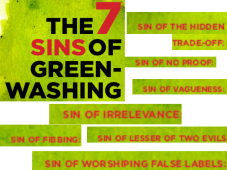
Image via Google Images. Click on image to enlarge.

Without question the leading environmentalist on the Council is three-term incumbent Nancy Whitten, who decided to retire at the end of this year. And Whitten has been increasingly critical of the collective Council’s direction on a number of environmental issues over the past four years.

While “greenwashing” isn’t the term that comes to the top of the conversation with Whitten, she didn’t disagree with its use when it comes to how Sammamish approaches the environment now. And she’s especially critical of Vance’s evolution away from his historical green leanings.

Continue reading