City’s Newsletter on growth distorts the facts; Variances-R-Us

Newsletter LogoThe September Sammamish City Newsletter–which has become an electioneering tool for the Nov. 3 ballot at taxpayers’ expense–has one and two-thirds pages devoted to growth issues.

Unfortunately, it just flat-out distorts and omits some important facts.

In a Q&A format, the Newsletter begins on Page 1 and jumps to Page 3, discussing a host of issues.

Here’s what’s distorted:

Continue reading

“Greenwashing” in Sammamish: A Special Report

  1. Greenwashing (a compound word modeled on “whitewash”), or “green sheen,” is a form of spin in which green PR or green marketing is deceptively used to promote the perception that an organization’s products, aims or policies are environmentally friendly.–Wikipedia.

Since the 2003 Sammamish City Council election, in which environmental-leaning candidates swept the election, the Council prided itself on pursuing “green” policies and ordinances.

The City Manager was far less gun-ho, often lagging his own staff, especially when it came to a concept called Low Impact Development, or LID (not to be confused with Local Improvement Districts, also LID, a special tax option–so context of “LID” is always important to understand).

The current Council is comprised of what would ordinarily considered to be environmentalists. Of the seven, only Member Don Gerend leans “development” over the environment–or so its appears. Tom Odell and Bob Keller proved to have strong environmental credentials. Ramiro Valderrama evolved into a strong backing of the environment. Deputy Mayor Kathy Huckabay and Mayor Tom Vance not only consider themselves environmentalists but have an historical track record supporting this.
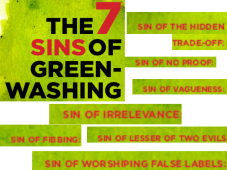
Image via Google Images. Click on image to enlarge.

Without question the leading environmentalist on the Council is three-term incumbent Nancy Whitten, who decided to retire at the end of this year. And Whitten has been increasingly critical of the collective Council’s direction on a number of environmental issues over the past four years.

While “greenwashing” isn’t the term that comes to the top of the conversation with Whitten, she didn’t disagree with its use when it comes to how Sammamish approaches the environment now. And she’s especially critical of Vance’s evolution away from his historical green leanings.

Continue reading

Kokanee savior targets next step: Zaccuse Creek restoration

Sammamish’s leading savior of the threatened kokanee salmon, the only salmon native to Lake Sammamish, is taking the next step to save the species: the restoration of Zaccuse Creek.

Wally Pereyra, who spent hundreds of thousands of dollars to restore Ebright Creek to help save Kokanee salmon, is moving on to Zaccuse Creek as the next phase of his decades-long effort. the Kokanee are native to Lake Sammamish. Photo via Google image. Click on image to enlarge.

Wally Pereyra, who already spent hundreds of thousands of dollars of his own money to restore Ebright Creek and to appeal City of Sammamish approvals of upstream development he believes would harm Ebright Creek, is preparing to restore Zaccuse Creek in cooperation with the local Snoqualmie Tribe and, he hopes, the City.

Planning began several years ago. A June 2012 study with King County surveyed the creek, a culvert that goes underneath East Lake Sammamish Parkway and upstream and downstream from Pereya’s property. The study has several photos illustrating the 25 page report.

Pereyra owns several large parcels of land south of Thompson Hill Road, continuously along the Parkway to his residence.

Continue reading

Why the “plan” is more than a plan for TIP

The Sammamish Review covered the Six Year Transportation Improvement Plan last Friday that included Sammamish’s repeated view that the TIP is nothing more than a “plan” and not a budget.

Technically this may be true, but the City Council raised the bar when it approved the TIP July 7.

Council Members, and the City Administration, used the moment to emphasize the plan was constructed and adopted without the assumption that bonded indebtedness would be required to fund the plan.

Continue reading

Sammamish needs to open up with transparency on TIP; there’s a “now you see it, now you don’t” show happening

Illustration via Google images.

Sammamish officials have a serious transparency and credibility problem.

The side-by-side comparison of the 2014 and 2016 Six Year Transportation Improvement Plans (TIPs) shows what appears to be creative “book keeping” to present a financial picture that is rosy when it’s really not. Sammamish Comment also reviewed prior TIPs to compare projects and projected costs.

Sammamish Comment spent this week dissecting the TIPs for the Readers. The issues are these:

Continue reading