Setting priorities: King, Pierce and Snohomish counties–or for Sammamish

As the Nov. 8 election approaches, the Sammamish City Council still has not taken a formal position on whether it supports Sound Transit 3 (ST3). The topic is set for discussion at the Oct. 4 Council meeting.

Sammamish City Council: Back row, L-R: Tom Odell, Mayor Don Gerend, Deputy Mayor Ramiro Valderrama, Tom Hornish. Front row, L-R: Kathy Huckabay, Christie Malchow, Bob Keller.

Sammamish City Council: Back row, L-R: Tom Odell, Mayor Don Gerend, Deputy Mayor Ramiro Valderrama, Tom Hornish. Front row, L-R: Kathy Huckabay, Christie Malchow, Bob Keller.

Five of the seven members previously said they oppose ST3 as it currently is laid out. Two members, Kathy Huckabay and Bob Keller, support ST3 in the name of regionalism. While regionalism is an admirable goal, the plan needs to make sense. ST3 has serious flaws.

Even Mayor Don Gerend, who is a regionalist and represents Sammamish on many such committees, finds the ST3 plan so bad and so disadvantageous to Sammamish, that he declared his opposition to ST3.

As this column has reported several times, the $54bn plan doesn’t even guarantee a single project. It only guarantees that taxpayers will no longer have the power of the vote over new taxes. This power shifts solely to the ST board, which is comprised of appointed people not the least bit accountable to taxpayers.

ST3 proposes less bus service for Sammamish, which now is the second or third largest city on the Eastside.

ST3 says it will give Sammamish a north end park-n-ride. But as noted, this isn’t guaranteed.

For this reduction in service, removal of direct taxpayer authority over new taxes and a park-n-ride that may not even get built, Sammamish taxpayers get to pay between $500m and $550m over the next 25 years.

It’s overdue for the City Council to stand up and take a position.

Supporting ST3—or not—is a matter of the City Council setting the right priorities for the people they were elected to represent. They were not elected to represent the greater King County, nor Piece County nor Snohomish County—all part of the Sound Transit taxing district.


Continue reading

Town Center Moratorium dead, but growth issues heading toward Retreat

Valderrama

Deputy Mayor Ramiro Valderrama unleashed a firestorm of opposition to a building moratorium when he suggested one for the Sammamish Town Center.

The Sammamish City Council decided Tuesday to not pursue a proposal by Deputy Mayor Ramiro Valderrama to undertake a 60-day study that could have led to a building moratorium for the Town Center.

The TC is already under construction, but there remains about 40 acres for which a building permit application has yet to be filed.

The Council considered Valderrama’s suggestion after nearly two hours of public comment, nearly all of it opposing a moratorium

But the issue isn’t dead. Continue reading

City to discuss moratorium prospect tomorrow

Kamp Property

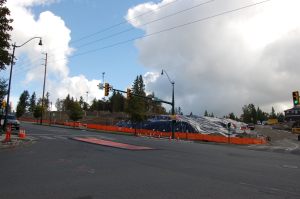
The Kamp property at 228th Ave. SE and SE 20th shortly after clearing and grading was completed. A building moratorium wouldn’t have stopped this project. It would have been delayed. It was vested to rules and entitled to build to those existing at the time any moratorium might have been adopted. Potential new, more restrictive rules wouldn’t apply.

The Sammamish City Council will discuss the prospect for a building moratorium tomorrow at its meeting beginning at 6:30 pm.

After the topic first came up a week ago, a reader of The Comment posted the following in response:

  • We must come up with viable solutions to stop this madness! Once a property is developed, IT IS PERMANENT! Let’s promulgate zoning laws and rules that make sense in terms of safety, footprint, aesthetics, environmental and erosional impact, infrastructure funding such as for schools, roads, etc. After which, let’s have a qualified, committed, and properly-staffed government to enforce the wish of the PEOPLE! This should not become a race between property owners and developers cashing in, versus government’s unpreparedness to manage it, in accordance with the wish of the people!

In advance of the meeting tomorrow, a little review might be worthwhile as members of the public prepare to comment.

Continue reading

Surprise moratorium idea a bad one

City_of_SammamishDeputy Mayor Ramiro Valderrama sprung a surprise on the Sammamish City Council Sept. 13 when he suggested a study over 60 days for a building moratorium, starting with the Town Center.

The idea may have some merit; only a thorough discussion and perhaps some study will make this determination.

Tactically, Valderrama’s timing and forum was a bad idea.

Continue reading

Writing Sammamish’s first Comp Plan

In Part 1, the background, objectives and membership of the Planning Advisory Board was described. In Part 2, the PAB gets down to work writing Sammamish’s first Comprehensive Plan. This is six pages when printed.

City_of_SammamishThe 17-member Planning Advisory Board members were a cross-section of environmentalists, activists, developers, real estate agents and businessmen. The City Council did an admirable job of appointing a broad spectrum of people.

Open divisions from the start

However, from the start there was open tension among the members. Divisions from the bitter 1999 City Council election carried over to the PAB, which was appointed by this Council. Most of the members of the PAB supported the candidates who won in that bitter contest; a few supported the losing candidates, who, it will be remembered, lost by wide margins in what turned out to be a nasty race filled with anonymous fliers and a forged newsletter.

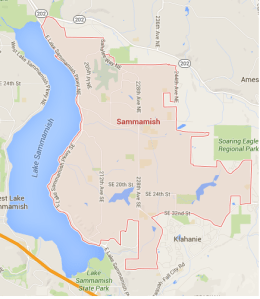
Sammamish MapOne of the developer-real estate appointees who supported the Council candidates later told one of the environmentalist-activists it was her personal mission to oppose everything he said. The two strong personalities clashed often and openly.

Two members resigned early. One Council Member later said they resigned because they thought the PAB was too heavily dominated by environmentalists. Whether this is an accurate characterization or not is beside the point. The broad spectrum of the appointees belies any charge that environmentalists ran away with the process. In the end, the Comp Plan was adopted and recommended by the PAB with just one dissenting vote and this vote had nothing to do with the environment or any other issue. The dissenter complained the PAB hadn’t finished its job. (This will be described later.)

Continue reading