
Valderrama cites fake facts in Town Center moratorium flip-flop

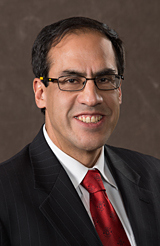
Ramiro Valderrama

Sammamish City Council Member Ramiro Valderrama, citing what turns out to be a series of unsubstantiated claims, executed a pirouette on his previous vote supporting a moratorium including the Town Center—and went splat.

The Town Center was exempted from the moratorium at the Nov. 21 meeting by a 4-3 vote, with Valderrama, Mayor Bob Keller and Council Members Don Gerend and Kathy Huckabay voting to lift it.

Valderrama said his vote always was about storm water management for the Town Center. In voting to exempt the Town Center, Valderrama claimed the emergency moratorium was not about traffic concurrency.

This simply wasn’t true.

Continue reading

“City Hall will not be the same;” reactions to the emergency building moratorium in Sammamish

The surprise move Tuesday by the Sammamish City Council to adopt an emergency building moratorium was about more than creating a pause to understand how traffic concurrency became an enabler of development rather than a control mechanism.

It was a rebuke to a staff and consultants that, years in the making, had ignored Council policy and the City’s own codes and Comprehensive Plan.

Continue reading

Council returns Sept. 5 to take up traffic, concurrency

  • This is six pages when printed.

Lyman Howard. Source: Google images.

The Sammamish City Council returns Sept. 5 from its August recess with traffic and concurrency the No. 1 priority and the No. 1 item on the agenda.

City Manager Lyman Howard will present a proposal to establish a “roadmap” going forward to take a top-to-bottom look at how the City implements traffic concurrency policies and testing that are required before development can be approved.

Controversial study prompts review

The review is the outgrowth of a controversial study by a Sammamish citizen, Miki Mullor, who concluded the City Staff had manipulated data to approve development. After a de facto moratorium brought on by the 2008 Global Recession, an improving economy and capital liquidity enabled a major spurt of growth that saw wholesale tree removal and increased traffic congestion over a few years beginning about 2014.

Mullor’s study contained incendiary charges that prompted Howard to label it “inaccurate” and “deeply offensive” at the June 6 Council meeting, the day after Mullor emailed the study to the City. Howard suggested later at the same meeting that Staff would answer questions raised by the study and from the Council.

Continue reading

The inside story of how traffic and concurrency became “the No. 1 issue in Sammamish:” failure, success of government

Update, July 25, 2017: The reporter for the Issaquah/Sammamish Reporter has been transferred to sister papers in the Bothell-Kenmore area.

A Special Report

This is seven pages when printed.

By Scott Hamilton

Analysis

Traffic and concurrency in Sammamish is a classic example of failure, and success, in government. It’s a glaring failure of the local newspaper.

It’s a success story of how a single citizen forced debate on an issue that even determined City Council members could not.

Here is the back-story of how traffic and concurrency became “the No. 1 priority in Sammamish.” A sequential history is necessary before we get to the punch line.

Continue reading

More study about new taxes or budget, service cuts for Sammamish

The day before the State Legislature began to reveal a big property tax hike is coming for education, Sammamish City Council members met with staff in a retreat to examine City finances.

The Council met with staff Thursday afternoon and evening. The State began releasing information about its new budget, with tax hikes, on Friday.

Council Member Tom Odell, looking at the 2017 Six-Year Transportation Improvement Plan (TIP) that identifies nearly $90m in spending through 2023 and up to $165m in future years, inclusive of the $90m, and declared officials need to examine all potential revenue sources to pay for these projects.

Translated, this means potential new taxes.

At the same time, Council Member Tom Hornish remains unconvinced that budget cuts aren’t impossible and if these are deep enough, funding the road projects could come out of operations and current revenues.

Continue reading