Council returns Sept. 5 to take up traffic, concurrency

  • This is six pages when printed.

Lyman Howard. Source: Google images.

The Sammamish City Council returns Sept. 5 from its August recess with traffic and concurrency the No. 1 priority and the No. 1 item on the agenda.

City Manager Lyman Howard will present a proposal to establish a “roadmap” going forward to take a top-to-bottom look at how the City implements traffic concurrency policies and testing that are required before development can be approved.

Controversial study prompts review

The review is the outgrowth of a controversial study by a Sammamish citizen, Miki Mullor, who concluded the City Staff had manipulated data to approve development. After a de facto moratorium brought on by the 2008 Global Recession, an improving economy and capital liquidity enabled a major spurt of growth that saw wholesale tree removal and increased traffic congestion over a few years beginning about 2014.

Mullor’s study contained incendiary charges that prompted Howard to label it “inaccurate” and “deeply offensive” at the June 6 Council meeting, the day after Mullor emailed the study to the City. Howard suggested later at the same meeting that Staff would answer questions raised by the study and from the Council.


Continue reading

The inside story of how traffic and concurrency became “the No. 1 issue in Sammamish:” failure, success of government

Update, July 25, 2017: The reporter for the Issaquah/Sammamish Reporter has been transferred to sister papers in the Bothell-Kenmore area.

A Special Report

This is seven pages when printed.

By Scott Hamilton

Analysis

Traffic and concurrency in Sammamish is a classic example of failure, and success, in government. It’s a glaring failure of the local newspaper.

It’s a success story of how a single citizen forced debate on an issue that even determined City Council members could not.

Here is the back-story of how traffic and concurrency became “the No. 1 priority in Sammamish.” A sequential history is necessary before we get to the punch line.

Continue reading

City Council, in rebuke of Administration, staff, consultants, votes in-depth review of traffic

  • “This is the No. 1 priority of Sammamish citizens.”–Tom Hornish.
  • City’s road program has been to “urbanize” streets, not ease congestion.
  • Administration attempted to discredit Mullor study.
  • Mullor credited with starting important conversation by Council Members.

In what can only be regarded as a searing rebuke of the City Manager, City Staff and outside transportation consultants, the Sammamish City Council voted 6-1 July 18 to pursue an in-depth review of transportation policies.

The Council also agreed to have discussions at every Council meeting in the foreseeable future.

Mayor Bob Keller was the dissenting vote.

Continue reading

City manager says Mullor inaccurate, “deeply offensive” with concurrency study

Miki Mullor

The Sammamish city manager cherry-picked three or four slides out of more than 90 to point to errors to discredit the concurrency study by citizen Miki Mullor.

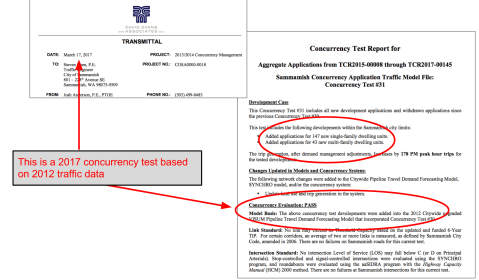
But Lyman Howard didn’t address a key issue Mullor pointed out: that the City is using mostly 2012 traffic data, with a sprinkling of 2014 traffic counts, for its concurrency analysis.

Continue reading

Sammamish manipulates traffic counts to approve development, study charges

Mike Mullor

Update,  June 6: The City Council meets tonight and this topic will come up. The meeting begins at 6:30pm at City Hall; Public Comment is scheduled about 7:25pm. Mullor’s study may be accessed here.

Original post, June 5:

Sammamish manipulated its traffic concurrency code to allow new development despite daily vehicle counts exceeding the thresholds for pass-fail standards, a study shows.

  • Miki Mullor will present his study to the meeting tonight of the Citizens for Sammamish. The group meets at 7pm at the fire station at 1851 228th Ave. NE.

The City uses traffic count data it has to apply for concurrency testing. Most of the data is from 2012. Some 2014 data is used. No 2016 data is used, according to the study. Using 2014 data on key roads where 2012 data is used would have failed some concurrency testing and denied the applications for development, the study shows.

Click on all images to enlarge. Source: Miki Mullor Concurrency Study.

Miki Mullor, a Sammamish resident, used Public Records Request (PRR) to obtain 2014 traffic count data that the City has but does not generally use in its concurrency testing.

Continue reading